

Valley Family Medicine · Program
Procedures
Most of our graduates use a wide range of procedural skills in their practice, and Valley Family Medicine procedural training is designed to prepare our residents well for this. While our residents learn procedure skills in a variety of settings, each resident gets written faculty feedback as they do each procedure so they know what steps they are doing well and what steps to focus on learning. The faculty comments also certify when residents are fully competent to do a procedure independently.
VFM has integrated procedure clinics where residents can gain competence through repeated opportunities to perform procedures they could expect to see in their own family medicine practice. Among the procedures residents experience are:
Clinic procedures
- Skin Excisions
- Toenail Removals
- Nexplanon Insertions/Removals
- IUD Placements/Removals
- Circumcisions
- Endometrial Biopsy
Musculoskeletal procedures
Sports medicine faculty from the Valley Family Medicine Residency program spend dedicated time with the residents at the clinic precepting musculoskeletal procedures:
- Joint Injections
- Joint Aspirations
- Casting
- Splinting
Inpatient procedures
Inpatient procedures in obstetrics, internal medicine, and pediatrics are supervised by either VFM or specialty faculty, with similar written step by step feedback. These procedures include:
- Intrauterine Pressure Catheter and Fetal Scalp Electrode placement
- Incision & Drainage
- Lumbar Puncture
Residents who are interested also have the opportunity to be involved in Vasectomies, Manual Uterine Aspirations, and Flex Sigmoidoscopies.
Residents also have the opportunity to be assigned to the VFM Colposcopy Clinic, working with family medicine faculty trained in colposcopy, in addition to assigned time in a dedicated OB/GYN clinic in VFM with Dr. Dara Jolly, where residents learn skills like First Trimester Dating using ultrasound.
Osteopathic residents also have access to specialty OMT clinic where they can practice their osteopathic manipulation skills.
Ultrasound
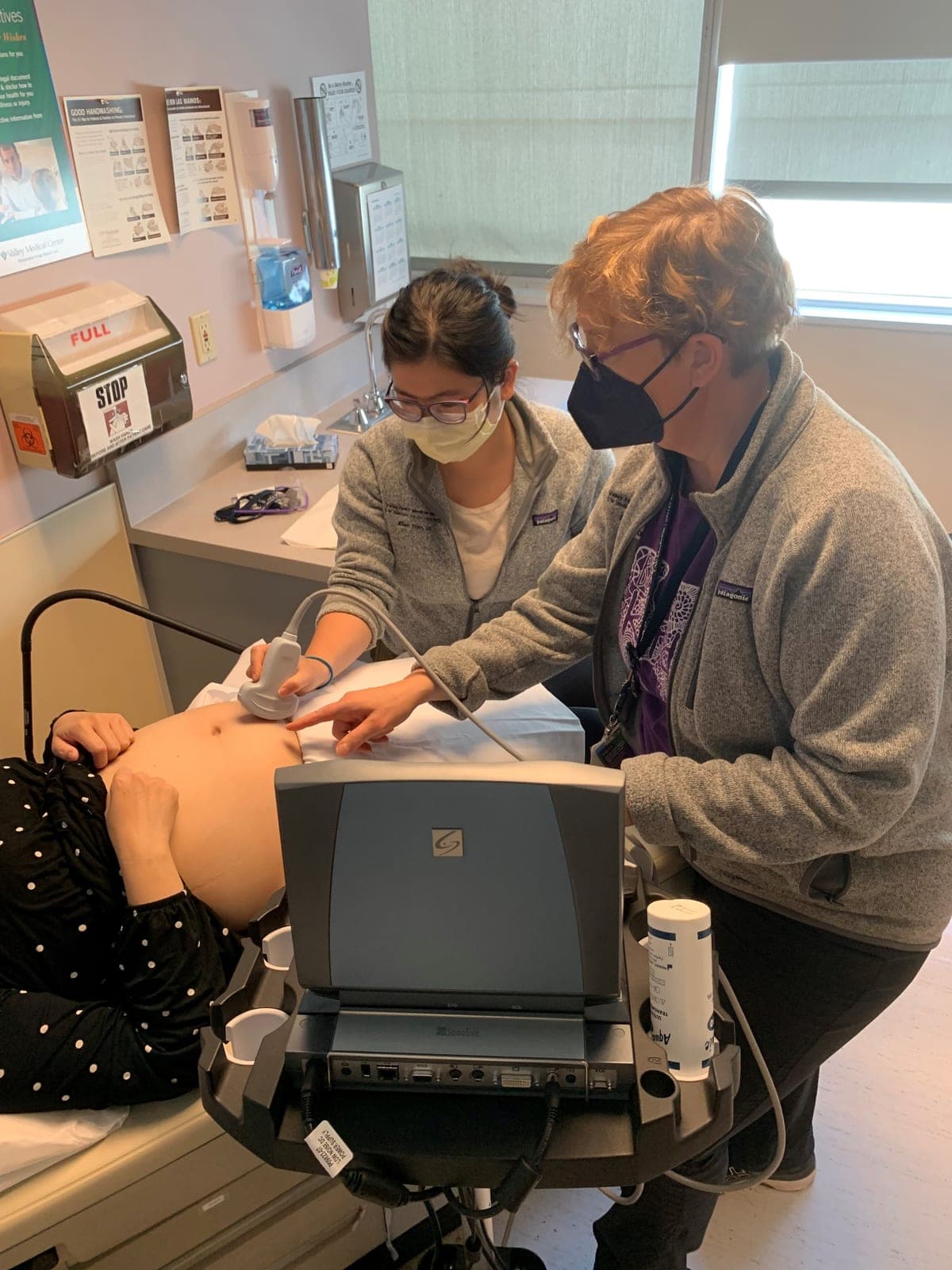
Point-of-care ultrasound
Ultrasound workshop: Kris Sherwood, David Lin and Ellen Tran POCUS: Charles Randolph and Brian Ostler Ultrasound workshop: Nathan Lawrence and Brandi Boden
Hands-on
Simulation models for hands-on procedures
Shoulder injection: Brent Wiederhold, Serena Fang and Nate Lawrence Orthopedic injections workshop: Kris Sherwood, Brendan Jackson-Fowl, Brent Wiederhold and Helen Bae Dr. Amanda Kim demonstrating IUD placement to the PGY-1s Orthopedic workshop: Kris Sherwood and Helen Bae Casting workshop: classes of 2025 and 2026 Orthopedic procedures workshop: Soumya Choudhury Casting workshop: class of 2026 Dr. Bainwol and Dr. Haris Ahmad practicing injections