

Valley Family Medicine · Curriculum
Family Medicine Inpatient Service (FMIS)
Family Medicine Inpatient Service (FMIS) training
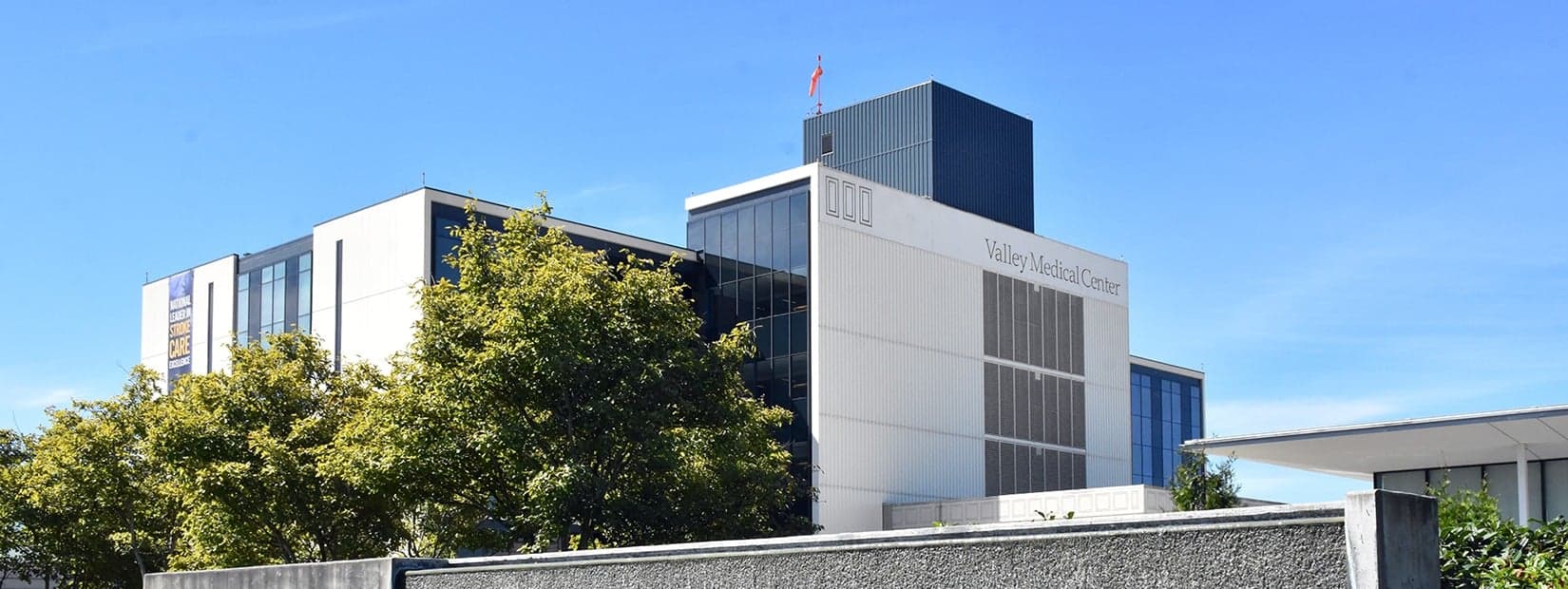
On the Family Medicine Inpatient Service (FMIS), residents care for all Valley Family Medicine patients admitted to Valley Medical Center, including those who need CCU-level care. Residents also admit and care for patients whose primary care is at other clinics. Because residents follow their own patients from the clinic into the hospital and back again, FMIS offers true continuity of care across the full spectrum of illness.
The full spectrum of hospital medicine
Residents on FMIS see a wide range of acuity and complexity, from common admissions and exacerbations of chronic illness to medically complex, critically ill patients who need multidisciplinary care, across a broad range of diagnoses.
Dedicated inpatient curriculum
Teaching is built into every day on FMIS. A sample day of inpatient didactics:
| Time | Activity |
|---|---|
| 7:00–7:15 AM | Morning teachingShort cases on chest X-rays, ECGs, and dermatologic and physical exam findings, run by the night senior resident. |
| 9:30–10:30 AM | VFM roundsOn Tuesdays and Thursdays, our clinical pharmacist, Vivian Cheng, PharmD, joins rounds as a resource for inpatient pharmacy questions and for pharmacy-focused teaching. |
| 10:30–11:15 AM | Rounding with hospitalists |
| 12:30 PM | Noon conferenceMonthly Radiology Rounds, Valley Medical Center Grand Rounds, or FMIS inpatient didactics on core topics. |
- Palliative care rounds, a dedicated space to discuss the challenges of caring for seriously ill patients
Point-of-care ultrasound
The inpatient service has its own point-of-care ultrasound (POCUS) curriculum. Dedicated portable ultrasound devices and multiple POCUS-trained staff support dedicated POCUS didactics and hands-on application with residents' own patients.
The FMIS team FMIS: class of 2027
Hands-on
Code Blue and Rapid Response training
Code Blue and Rapid Response simulation Code simulation: class of 2028 Mock Code Training in the ORs Mock code training Mock code training Mock code training: class of 2027 Mock code training: class of 2027
By year
Family Medicine Inpatient Service (FMIS) rotations
| Year | Rotation | Weeks |
|---|---|---|
| PGY-1 | Family Medicine Inpatient Service (incl. CCU and a 2-week Inpatient Immersion) | 18 |
| PGY-2 | Family Medicine Inpatient Service (incl. CCU) | 12 |
| PGY-2 | Night Float | 4 |
| PGY-3 | Family Medicine Inpatient Service (incl. CCU) | 6 |
| PGY-3 | Night Float | 4 |